
Technology that expands access, strengthens opportunity and works for more learners.
Ann-Connect was built around a simple idea: where a learner lives, the quality of their internet connection, or the infrastructure available to them should not determine the quality of education they receive.
Our work focuses on two interconnected challenges: improving access to quality education and reducing the inequalities created by unequal access to digital infrastructure.
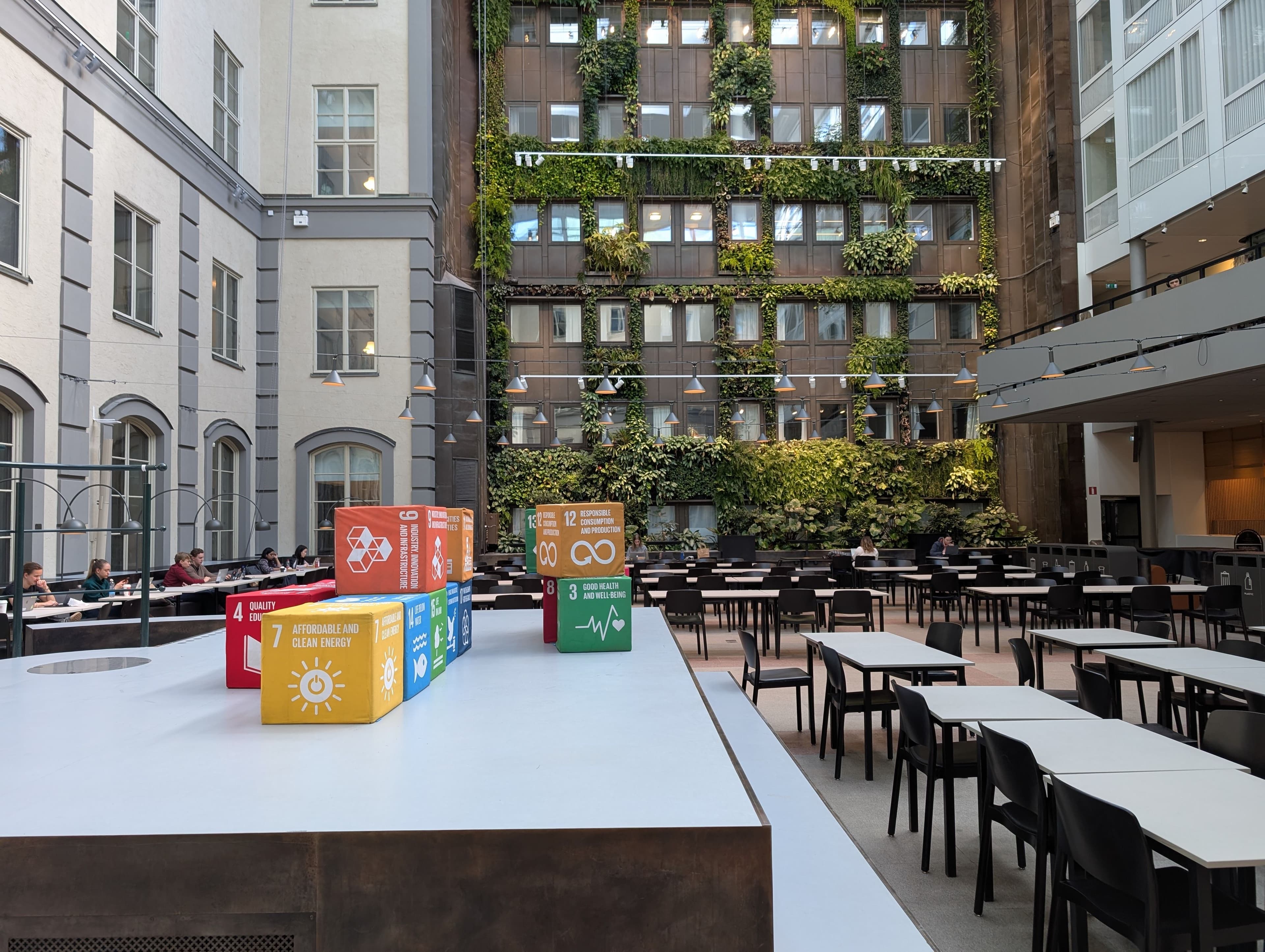
Advancing the Sustainable Development Goals
Ann-Connect’s technology contributes directly to two United Nations Sustainable Development Goals:
SDG 4 — Quality Education
Ensure inclusive and equitable quality education and promote lifelong learning opportunities for all.
Through Ann-Workspace, we support institutions in delivering digital learning, assessment and collaboration in environments where connectivity may be unreliable or unavailable.
Our offline-first assessment infrastructure helps learners continue participating in high-stakes examinations despite connectivity interruptions, while Room and Nexa AI support teaching, engagement and access to learning assistance.
SDG 10 — Reduced Inequalities
Reduce inequality within and among countries.
Digital transformation can unintentionally create another form of inequality when services are designed only for people with reliable, affordable internet access.
Ann-Connect addresses this digital divide by designing technology that can function across different connectivity environments — helping institutions extend digital education and assessment to learners who may otherwise be disadvantaged by infrastructure limitations.
We believe impact should be demonstrated through deployment, testing and engagement, not simply measured by the number of products we build. To date, Ann-Connect has:
3
Pilot studies conducted
With:
- University of South Africa (UNISA)
- Tshwane University of Technology (TUT)
- African Professionalisation Initiative
25+
Product demonstration sessions
With online schools and education organisations exploring the use of Ann-Connect technology.
2,000+
Learners engaged
Through product demonstrations, pilots, testing and engagement activities.
These engagements have allowed us to take the technology beyond the development environment and understand how learners, educators and institutions interact with it in real-world conditions.
From connectivity barriers to educational opportunity.
For a learner, losing connectivity during an examination is more than a technical inconvenience.
It can mean lost time, interrupted concentration, anxiety and, in some cases, an unfair academic outcome.
For an institution, unreliable connectivity can create operational complexity, increase examination risk and make digital transformation difficult to scale.
Ann-Connect addresses the problem at the infrastructure level.
Rather than expecting every learner to have the same connectivity, Ann-Workspace is designed to accommodate different connectivity environments.
That means institutions can pursue digital-first education without making perfect internet access a prerequisite for participation.
Sustainability is built into the model.
Our approach to sustainability extends beyond environmental considerations. We think about sustainability across social impact, technology and economic viability.
Social sustainability
We aim to reduce barriers that prevent learners from fully participating in digital education.
By designing for environments with unreliable connectivity, Ann-Connect can help institutions reach a broader and more diverse learner population.
Economic sustainability
Technology should be affordable to deploy and sustainable to operate.
Our platform is designed to help institutions consolidate assessment, invigilation, teaching and collaboration capabilities rather than relying on multiple disconnected systems.
For institutions, this can reduce operational complexity while creating a foundation that can scale as learner populations grow.
Technological sustainability
We build around interoperability rather than isolated systems.
Open APIs and integrations with existing learning environments allow organisations to build Ann-Connect into their existing technology ecosystem rather than having to replace everything they already use.
Environmental sustainability
Digital delivery can also reduce some of the physical resources associated with traditional education and assessment — including paper-based examinations, physical distribution of assessment materials and unnecessary travel for certain learning and assessment activities.
At the same time, we recognise that digital infrastructure has its own environmental footprint. Our long-term approach is therefore focused on building technology that is efficient, scalable and purposeful, rather than simply moving every process online.
Designing for the learner who gets left behind.
Our impact philosophy is simple:
Digital transformation should close gaps, not create new ones.
A learner with a strong fibre connection and a learner relying on intermittent connectivity should both have a meaningful opportunity to participate.
A university in a major city and an institution serving learners across remote or underserved communities should be able to adopt digital assessment.
An online school should be able to deliver learning without assuming that every student has identical infrastructure.
This is why offline-first is not simply a technical feature of Ann-Workspace. It is part of our impact strategy.
From pilots to scale.
Our pilot programmes and product demonstrations have helped us identify the practical realities institutions and learners face when adopting digital education technology.
The next phase of our impact journey is to move from individual pilots and demonstrations toward broader institutional deployments, allowing us to measure outcomes at greater scale.
We are focused on measuring impact through indicators such as:
Access
How many learners can participate despite connectivity limitations?
Continuity
How often do connectivity interruptions prevent learners from completing digital activities or assessments?
Reach
How many institutions, educators and learners can the platform serve?
Engagement
How effectively are learners participating in digital learning environments?
Equity
Does the technology reduce disadvantages associated with unequal digital access?
Sustainability
Can institutions deploy and operate the technology sustainably as their learner populations grow?
Our ambition
Ann-Connect is working towards a future where access to quality digital education is not determined by the strength of a learner’s internet connection.
By combining offline-first infrastructure, secure assessment, intelligent invigilation, virtual collaboration and AI-assisted learning, we aim to give institutions the technology they need to make digital education more accessible, resilient and inclusive.
Technology should meet learners where they are.